Guide · Incubation
From setting eggs to hatch day
What we actually run in our own incubators. Nothing here is exotic — most hatches fail on temperature, humidity, or impatience, and those are all fixable.
- 99.5°F forced-air
- 101–102°F still-air
- Turn 3–5× daily
- Candle day 7 & 14
Reference
Days, lockdown, and humidity by species
Temperature is the same for all of them — 99.5°F forced-air, 101–102°F still-air, measured at the top of the egg, not the floor of the tray.
| Species | Incubation | Stop turning | Early humidity | Lockdown humidity |
|---|---|---|---|---|
Chicken Bantams often pip a day early; large fowl a day late. | 21 days | Day 18 | 45–50% | 65–70% |
Coturnix Quail Fast and forgiving — the best first hatch for a new incubator. | 17–18 days | Day 14 | 45% | 65–70% |
Call & most ducks Waterfowl eggs want more moisture than chicken eggs. | 28 days | Day 25 | 50–55% | 70–75% |
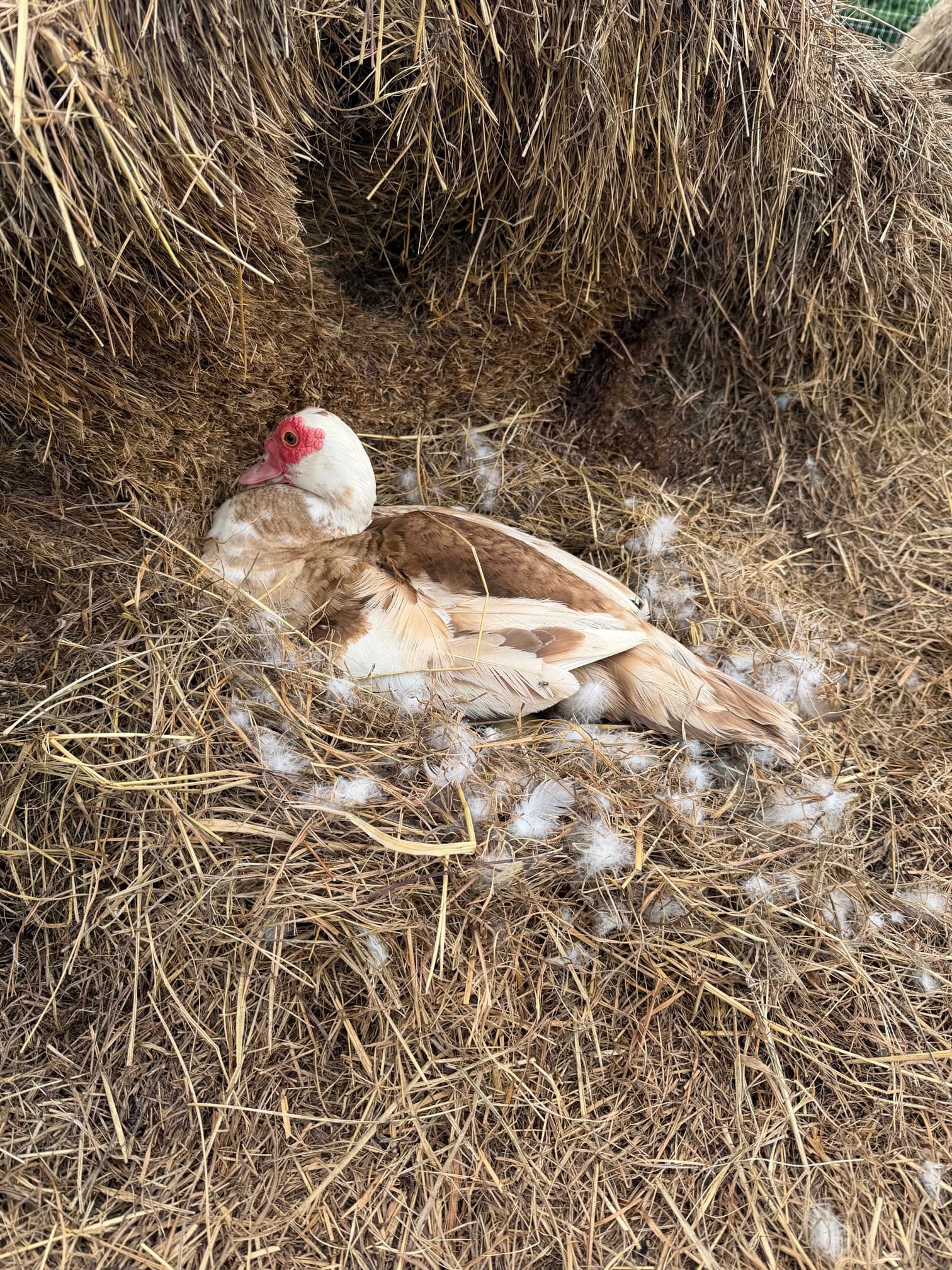
Muscovy Duck The long one. Daily misting and cooling from week two helps. | 35 days | Day 31 | 55% | 70–75% |
The run
Four stages, start to finish
Before you set
Rest and sort the eggs
Hatching eggs travel and settle better than most people expect, but they need to sit still first. Stand them point-down at room temperature for 8–24 hours before they go in — longer if they came through the mail, so the air cells can re-seat.
- Never wash hatching eggs — washing strips the bloom that keeps bacteria out.
- Set eggs within 7–10 days of lay; hatch rate falls off noticeably after that.
- Cull anything cracked, misshapen, oversized, or thin-shelled before it goes in.
- Run the incubator empty for 24 hours first and confirm it holds temperature.
Days 1–17
Steady heat, steady turning
Hold 99.5°F in a forced-air incubator (101–102°F still-air, read at the top of the egg) and 45–55% humidity depending on species. Turn the eggs an odd number of times a day — three or five — so they never spend two consecutive nights on the same side.
- An odd number of daily turns varies which side rests overnight.
- Candle on day 7 and again on day 14; pull clears and blood rings.
- Brief cooling — 10–15 minutes daily from week two — mimics a broody hen and helps waterfowl.
- Trust a calibrated thermometer over the incubator's own display.
Lockdown
Stop turning, raise humidity
Three days before the hatch date, stop turning, take out the turner, lay the eggs on the tray floor, and take humidity up to 65–75%. From here the incubator stays shut.
- Chicken day 18 · quail day 14 · duck day 25 · Muscovy day 31.
- Add warm water through a port rather than opening the lid.
- Every lid-opening drops humidity and can shrink-wrap a chick mid-hatch.
Hatch day
Leave them alone
A chick pips, rests, and then unzips — the whole process can take 24 hours, and the resting is normal. Chicks absorb the yolk sac before they emerge, which carries them for up to 72 hours, so there is no rush to feed them.
- Do not help a pipped chick; premature assistance usually causes bleeding.
- Let chicks dry and fluff in the incubator for 6–12 hours before moving them.
- Give the stragglers a full extra 48 hours past the due date before you call it.
Candling
What you should see, and when
Chicken timings. Quail run about four days ahead of this; ducks about a week behind. Candle in a dark room, briefly, and put the egg straight back.
Day 4
First veins — a faint red spider web against the shell.
Day 7
Clear dark eye spot and branching veins. Pull the clears.
Day 10
Embryo fills half the egg; you may see it move.
Day 14
Mostly dark mass. Pull anything with a blood ring.
Day 18
Air cell drawn down and tipped. Lockdown.
When it goes wrong
Troubleshooting a bad hatch
Almost every problem on this list traces back to one of two dials. Fix the dial, not the symptom.
Nothing developing at day 7
- Likely
- Infertile eggs, or the incubator ran cold for a long stretch early on.
- Fix
- Check the rooster-to-hen ratio at the source and calibrate your thermometer against a known-good one. A single cheap dial thermometer is the most common culprit.
Chicks pip but never unzip
- Likely
- Humidity dropped during lockdown and the membrane dried onto the chick.
- Fix
- Stop opening the lid after lockdown. Top water up through a port. If you've already lost humidity, raising it fast can still save some of them.
Hatch is early and chicks are small
- Likely
- Running too hot — even a degree adds up over three weeks.
- Fix
- Drop to a true 99.5°F forced-air. Verify with a thermometer at egg height, not the incubator's own readout.
Hatch is late and chicks are sticky
- Likely
- Running cool, or humidity was too high through the first two-thirds.
- Fix
- Warm it up and dry it out. The air cell should reach about a third of the egg by lockdown — candle to check rather than guessing.
Splayed legs after hatch
- Likely
- Slippery brooder floor, usually newspaper or bare plastic.
- Fix
- Use pine shavings or rubber shelf liner from day one. Hobble the affected chick with a plaster loop for two or three days and it usually corrects.
Hatched them? The next six weeks are covered in the brooding guide.
Need eggs to practice on?
Coturnix quail hatch in seventeen days and forgive a lot of mistakes — the best first run for a new incubator.